
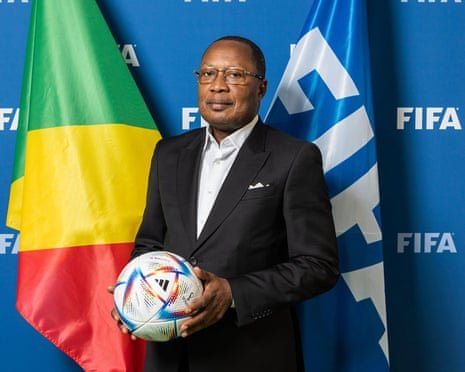
Arrest Warrant issued for Congolese Football Chief Jean-Guy Blaise Mayolas
The scandal surrounding the Congo-Brazzaville Football Federation (FECOFOOT) has taken a dramatic turn with its president, Jean-Guy Blaise Mayolas, his wife, and son now fugitives from justice.
Authorities in Brazzaville have confirmed that international arrest warrants have been requested through Interpol after the trio fled the country ahead of their trial. Their absence did not prevent the court from proceeding, and they were convicted in absentia of embezzling FIFA funds intended to support football development during the Covid-19 pandemic.
The case centers on $1.1 million provided by FIFA in February 2021 as part of its global Covid-19 relief plan. Investigators revealed that Mayolas and his family diverted the funds for personal use, betraying the trust of both FIFA and the Congolese football community. Particularly shocking was the revelation that $500,000 of the stolen money had been earmarked for the women’s national team, a sector already struggling for resources and recognition.
The trial highlighted systemic issues within FECOFOOT, with prosecutors arguing that the federation’s leadership had long operated with little transparency or accountability. Mayolas, who had positioned himself as a reformer when he took office, now stands accused of undermining the very institution he was meant to protect. His conviction marks one of the most high-profile corruption cases in African football in recent years.
Authorities believe Mayolas, his wife, and son fled Congo-Brazzaville weeks before the trial began, anticipating the guilty verdict. Investigators suspect they may be hiding in neighboring Cameroon or the Democratic Republic of the Congo, though their exact whereabouts remain unknown. The issuance of Interpol warrants signals the seriousness with which the Congolese government is pursuing the case, hoping to bring them back to face justice.
The scandal has sent shockwaves through the football community, particularly among players and supporters of the women’s team, who were directly affected by the theft. Many have expressed outrage that funds meant to support their training, travel, and competitive opportunities were instead siphoned off. The incident has reignited calls for stronger oversight of FIFA’s financial aid programs, especially in regions where governance structures are fragile.
For Congo-Brazzaville, the case represents both a national embarrassment and a turning point. While the conviction of Mayolas and his family demonstrates a willingness to confront corruption, the federation now faces the daunting task of rebuilding credibility. Restoring trust among players, fans, and international partners will require sweeping reforms, stricter financial controls, and a renewed commitment to transparency. Until then, the shadow of this scandal will continue to loom over Congolese football.
